

Table of Contents
- Why Body Safe Silicone Vibrators Are Worth the Investment
- How to Spot the Signs of Low Quality Silicone Toys
- Types of Body Safe Silicone Vibrators: Clitoral, G-Spot, and Wand
- How to Clean Silicone Sex Toys (and Keep Them Body Safe)
- The Best Vibrator Lubricants for Silicone Toys
- Noise, Durability, and Real-World Performance: What to Check Before Buying
- Accessibility, Comfort, and Finding the Right Fit for Your Body
- Conclusion: Your Next Step Toward Safe, Satisfying Pleasure
- Frequently Asked Questions
Last Updated: October 5, 2026
Why Body Safe Silicone Vibrators Are Worth the Investment
The best body safe silicone vibrators are nonporous and hypoallergenic, so they will not harbor bacteria or break down over time.
Most shoppers focus on shape, color, or vibration strength, but material matters more.
Silicone vibrators are made from silicone, a synthetic polymer valued in adult products for being nonporous, hypoallergenic, and easy to sanitize.
Below, we break down how to verify what you are buying, how to clean it, which lubricants work, and how to find a fit for your body.
How to Spot the Signs of Low Quality Silicone Toys
Cheap toys often claim to be silicone when they are not. Products labeled "silicone blend" or "silikon" contain TPE, PVC, or jelly rubber mixed with silicone, fillers you want to avoid.
Here is what to check before you buy:
- Ingredient list: Real silicone toys usually list "100% silicone" or "platinum-cured silicone" with no other materials.
- Smell: A strong chemical or plastic odor is a red flag. Quality silicone has little to no smell.
- Feel: Silicone feels silky and dry to the touch. Jelly and TPE feel tacky or greasy.
The Flame Test and Other Verification Methods
Some shoppers use a flame test: genuine silicone produces white ash and no melting plastic smell, while blends burn and smell like chemicals. We do not recommend this on a toy you plan to keep, since it damages the surface. Instead, check the manufacturer's material documentation or ask the retailer directly.
Types of Body Safe Silicone Vibrators: Clitoral, G-Spot, and Wand
Each vibrator type is built for a specific kind of stimulation. Match the type to the sensation you actually want.
Clitoral Vibrators for External Stimulation
Clitoral vibrators deliver focused external stimulation and tend to be small, quiet, and easy to use. Look for a soft-touch tip and a shape that fits without constant repositioning.
G-Spot Vibrators for Internal Stimulation
G-spot vibrators use a curved design to reach internal stimulation points. A slight curve and a firm but flexible shaft matter more than raw power; dual-density silicone, pairing a firm core with a softer outer layer, gives both reach and comfort.
Wand Vibrators for Broad, Powerful Stimulation
Wand vibrators provide broad, powerful stimulation across a wider area, a favorite for people who find pinpoint pressure too intense. They are typically the strongest option, so check noise level and weight first, a heavy wand tires the hand.
| Type | Stimulation | Best For | Key Feature |
|---|---|---|---|
| Clitoral | External | Focused, gentle sensation | Small, quiet, soft-touch tip |
| G-spot | Internal | Curved reach and pressure | Curved shaft, dual-density silicone |
| Wand | Broad | Wide-area, powerful vibration | Large head, strongest motor |
How to Clean Silicone Sex Toys (and Keep Them Body Safe)
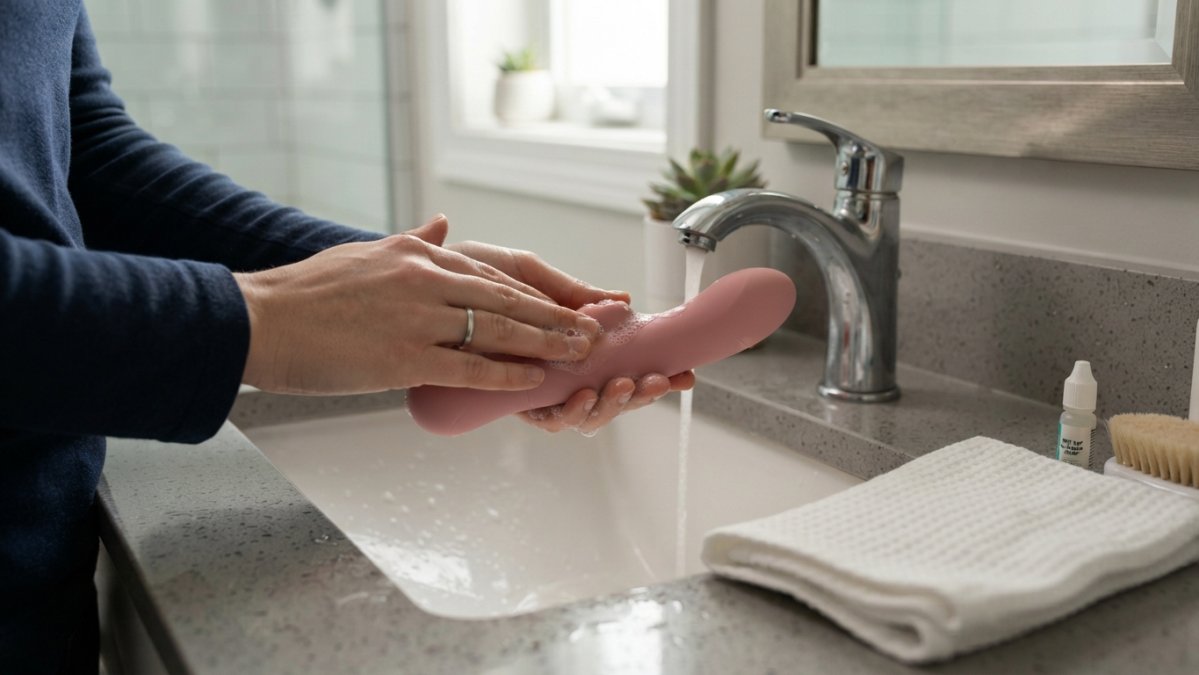
Cleaning silicone sex toys is simple: wash with warm water and mild, unscented soap, rinse thoroughly, and dry before storing. Because silicone is nonporous, bacteria cannot settle into it the way they do with jelly or TPE.
The Three Levels of Cleaning
Matching the cleaning method to the situation separates a toy that lasts from one that gets tossed after a few months.
- Routine clean (after every use): Warm water, a drop of mild unscented soap, and your fingers or a soft cloth. Rinse until no longer slick, then pat dry.
- Deep clean (weekly, or before sharing): Wash as above, then wipe with a 70% isopropyl alcohol pad and air-dry completely. Alcohol leaves no residue.
- Sanitizing (before sharing, or after illness): Silicone tolerates heat. Submerge a waterproof, motor-free silicone toy in boiling water for three to five minutes, or run it through the top rack of a dishwasher with no detergent and heated dry off. Never boil or dishwash a toy with a motor, charging port, or removable battery.
What Not to Do
A few habits quietly destroy silicone toys:
- Skip abrasive scrubbers. They scratch the surface, and scratches hide bacteria.
- Do not use silicone-based cleaners or silicone-based lubricant on silicone toys unless the label explicitly says it is compatible. The silicone in the product can bond with the silicone in the toy and leave a permanently tacky, gummy surface.
- Keep the motor housing and charging port dry. Rinse a waterproof toy under running water; for a water-resistant toy, wipe with a damp cloth and never submerge the port. Water in a charging port is the top cause of a toy that will not charge.
Drying and Storage That Actually Protect the Toy
Drying matters as much as washing. Air-dry upright on a clean towel or rack so water drains from crevices, then finish with a lint-free cloth. Store in a cool, dry place away from sunlight, each toy in its own pouch, silicone is unhappy pressed against TPE, jelly, or PVC, which can leach plasticizers onto its surface.
The Best Vibrator Lubricants for Silicone Toys
Water-based lubricant is the safest choice for silicone toys, because silicone-based lubricant can degrade silicone over time and leave the surface tacky or damaged. For longer-lasting glide, test a small amount on an inconspicuous area first.
Here is how the main lubricant types compare for silicone use:
- Water-based: Safe for all silicone, easy to clean, needs reapplication.
- Silicone-based: Long-lasting, but can break down silicone toys. Avoid with silicone.
- Hybrid: Mostly water-based with a small silicone content. Use with caution and test first.
Whatever you choose, read the ingredient list. Glycerin and heavy fragrance can irritate sensitive skin, and a lubricant that causes discomfort defeats the purpose of a body-safe toy.
Noise, Durability, and Real-World Performance: What to Check Before Buying
The specs on a product page tell you less than you think. A toy can list "quiet operation" and still be audible through a closed door, and "rechargeable" says nothing about battery life. Here is how to read past the marketing.
How to Judge Noise Without Hearing the Toy
There is no industry-standard decibel rating for vibrators, so treat any "whisper quiet" claim as marketing until you find a number. A few benchmarks:
- Under about 50 dB is roughly the level of a quiet conversation or a refrigerator hum, unlikely to carry through a closed door.
- Around 55-65 dB is comparable to a normal conversation or a dishwasher running; audible in the next room in a quiet house.
- Above 65 dB is closer to a vacuum cleaner and will be noticeable through walls.
Smaller clitoral toys are usually quietest because they have smaller motors; wands are loudest because they move more mass. If noise is your priority, look for reviews that compare the sound to something familiar ("quieter than my electric toothbrush") rather than a bare adjective. A high-pitched whine also carries further than a low, rumbly motor of the same volume.
Battery Life and Charging: What the Specs Hide
USB charging is standard now, but runtime varies widely, from roughly 45 minutes on a small clitoral toy to several hours on a larger wand, depending on intensity. Two details worth checking:
- Runtime at your preferred setting. Many toys quote maximum runtime at the lowest speed. If you use the highest setting, expect a fraction of that.
- Charging time and connector type. A magnetic charging port is easier to keep clean and water-resistant than a pinhole port, but it can disconnect if the toy shifts. A covered USB-C port is more secure but needs the cover seated properly to stay waterproof.
A common pattern is that a toy's first sign of aging is a shorter runtime, not a dead battery. If a toy that used to run for two hours now runs for 40 minutes, the cell is degrading.
Motor Quality and What Actually Breaks First
Durability comes down to the motor and the charging port, the two components that fail first, and both worth checking in reviews. A steady motor with adjustable intensity and multiple patterns is more versatile than one with a single high setting, and a motor that stays consistent across speeds signals better build quality than one that rattles or stalls at low settings.
Warranty, Repairability, and Product Lifespan
This is where long-term value lives. A vibrator is a small appliance with a finite life, and a few questions separate a toy that lasts from a disposable one:
- What does the warranty cover, and for how long? Common terms range from 90 days to a few years. A warranty covering the motor, the part most likely to fail, is worth more than one covering only defects on arrival.
- Is the battery replaceable? Most vibrators have sealed, non-replaceable batteries, so the toy's lifespan is the battery's lifespan. A replaceable battery is a genuine longevity advantage.
- Can any part be replaced? Removable silicone sleeves and interchangeable heads extend the useful life of the motor and make cleaning easier.
Waterproofing Ratings, Decoded
"Waterproof" and "water-resistant" are not the same thing. Water-resistant toys tolerate splashes and a damp wipe but should not be submerged; waterproof toys are sealed against immersion, making them safe to rinse fully and use in the shower or bath. If a listing does not specify, assume water-resistant and keep the motor housing dry.
Accessibility, Comfort, and Finding the Right Fit for Your Body
The best vibrator fits your hand, your body, and your range of motion. A toy that is awkward to hold or hard to reach will not get used, no matter how good the motor is.
Consider these factors:
- Grip and weight: If you have limited hand strength or joint pain, a lighter toy with a wider grip is easier to manage than a heavy wand.
- Reach and shape: A curved design helps if you have limited mobility or want to avoid awkward positioning.
- Softness: A softer, smooth surface is more comfortable for sensitive skin and for anyone new to internal stimulation.
Different bodies respond differently, and there is no single "correct" toy. If you are unsure, our team at Doctor John's can talk through options with you directly, and our discreet shipping means the only person who knows what you ordered is you.
Conclusion: Your Next Step Toward Safe, Satisfying Pleasure
Sorting through material claims, cleaning routines, and fit questions is more work than most shoppers expect, and getting it wrong usually means a toy that never leaves the drawer.
Doctor John's has helped people shop for sexual wellness since 1987, with thousands of products, expert advice from real staff, and free shipping on orders over $100. Browse our silicone vibrator selection and find a toy built for comfort, safety, and pleasure.
Frequently Asked Questions
What is the best body safe silicone for vibrators?
Platinum-cured silicone is the gold standard for body safe vibrators. It is nonporous, hypoallergenic, and does not contain phthalates or other harmful chemicals. Medical-grade and food-grade silicone both refer to purity levels, but platinum-cured silicone offers the highest chemical stability. When shopping, look for toys labeled 100% silicone or platinum-cured silicone. If a product says silicone blend or jelly, it likely contains other materials that can harbor bacteria.
How can I tell if a silicone vibrator is body safe?
Check the label for 100% silicone or platinum-cured silicone. Body safe silicone is nonporous, odorless, and has a smooth, soft-touch surface. If the toy smells strongly of chemicals or feels sticky, it likely contains lower-quality materials. Always buy from reputable retailers like Doctor John's that prioritize material safety.
What lubricant is safe to use with silicone vibrators?
Water-based lubricants are the safest choice for silicone vibrators. They are compatible with all silicone toys and easy to clean up. Avoid silicone-based lubricants because they can degrade the surface of silicone toys over time, making them sticky or causing micro-tears that harbor bacteria. Oil-based lubricants can also break down silicone and are not recommended for internal use. For the best vibrator lubricants for silicone, stick with high-quality water-based formulas.
How do I properly clean and sanitize silicone vibrators?
Wash your silicone vibrator with warm water and mild, unscented soap before and after every use. Use a soft cloth or your fingers to gently remove residue. For deeper sanitizing, boil it for 3-5 minutes (if it has no motor). Always check that your toy is waterproof before submerging. Store it in a clean, dry pouch away from other toys to prevent material interactions. Proper cleaning keeps your toy hygienic and extends its lifespan.